

CORINTH — Two free stops in Corinth tell connected stories: why armies fought over the town’s railroad crossing, and how people escaping slavery built a community behind Union lines.
For residents looking for a local outing or somewhere to take visiting family, the Corinth Civil War Interpretive Center and the separate Corinth Contraband Camp site offer exhibits, outdoor spaces and history close to home. One date matters for holiday plans: the interpretive center will be closed Thanksgiving Day, Thursday, November 26.
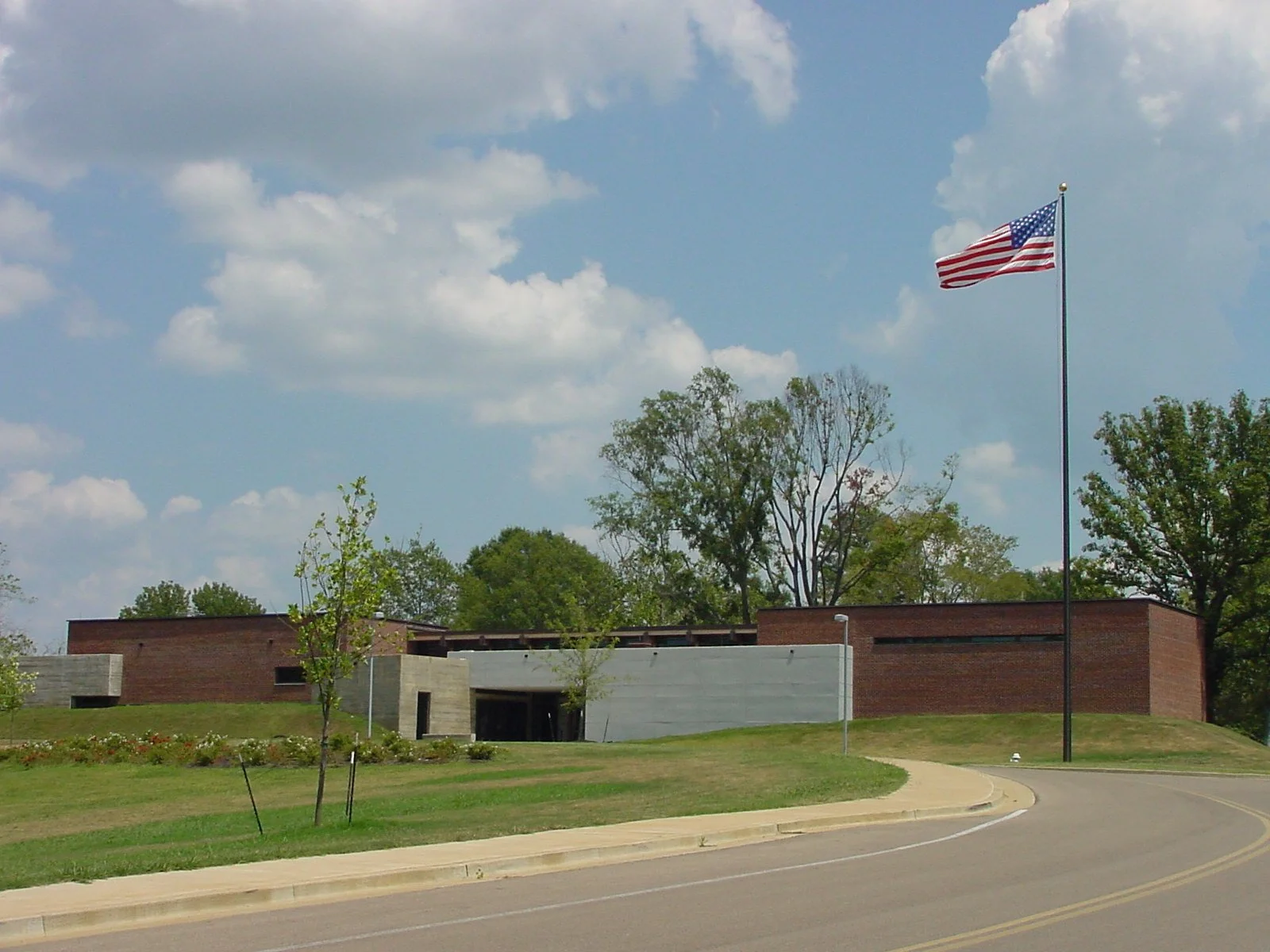
Start with the railroad town armies wanted
The interpretive center, at 501 West Linden Street, is part of Shiloh National Military Park. Its published hours are 9 a.m.–5 p.m. daily, except Thanksgiving Day, Christmas Day and New Year’s Day. Admission is free.
Inside, exhibits and films cover the Siege and Battle of Corinth and the town’s wartime occupation. The exhibits explain why control of the town mattered to both armies.
Two major railroads crossed at Corinth, making the junction a strategic military objective. According to the National Park Service’s Corinth history, Confederate forces withdrew in May 1862 after a Union siege. A Confederate attack that October ended in a Union victory. Active railroads still cross near the heart of town.
Visitors can also ask the ranger on duty about the Corinth Junior Ranger program. The park says all ages are welcome.
Read the history written into the courtyard
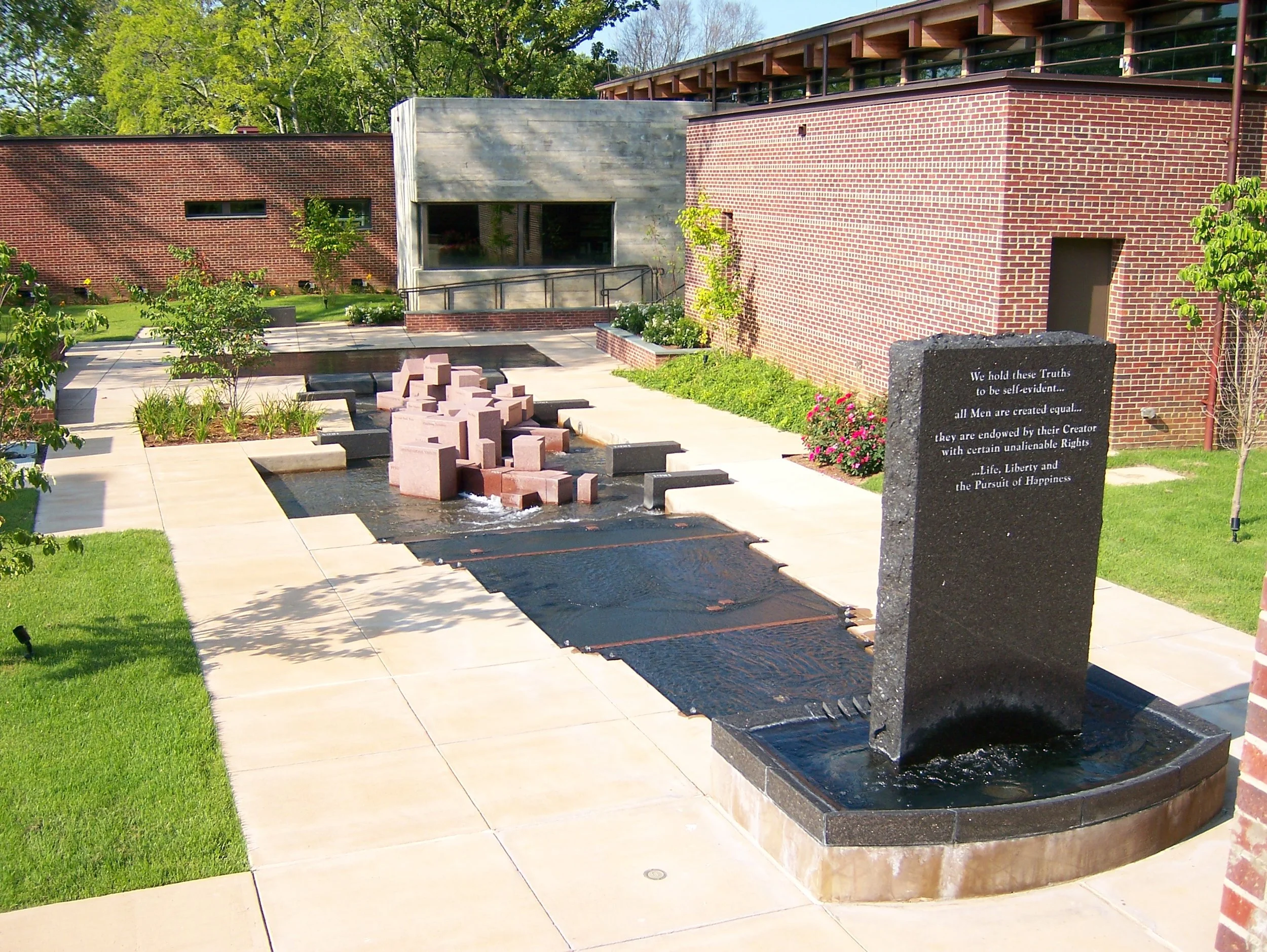
Behind the center, the Stream of American History turns a water feature into a timeline. The park’s courtyard guide explains how its design traces the country’s growth, divisions and Civil War.
The stream widens as states join the Union. During the section representing the war, it splits around blocks marking major battles and campaigns, then rejoins. The sizes of the battle stones reflect the casualties associated with those conflicts. That symbolism gives visitors a way to read the courtyard beyond its appearance as a fountain.
A second stop follows families seeking freedom
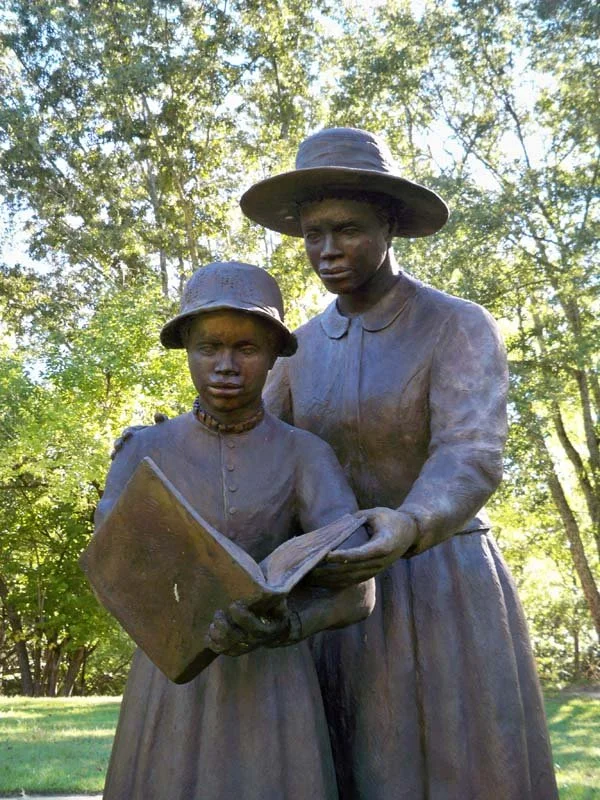
The Contraband Camp site preserves another part of Corinth’s story. Enslaved people fled farms and plantations to reach Union-held territory. In Corinth, the resulting refugee community developed homes, a school, a church and a hospital, according to the National Park Service.
The park’s camp history describes residents farming cotton and vegetables, families establishing homes, and children and adults pursuing an education. Men recruited in Corinth also served in the Union Army. These accounts show how the town became a place where freedom seekers worked to build lives during the war.
Today, a quarter-mile walkway passes six life-size bronze sculptures depicting the camp’s men, women and children. The park’s directions place the site opposite the intersection of Bunch Street and North Parkway. It is a separate stop from the interpretive center.
Plan the visit
- Cost: No entrance fee or park pass is required at Shiloh National Military Park, including its Corinth sites.
- Center hours: 9 a.m.–5 p.m.; closed November 26, December 25 and January 1.
- Outdoor time: The park lists its grounds as open from sunrise to sunset. Allow for weather when planning the camp walkway and courtyard.
- Questions: Call the Corinth Civil War Interpretive Center at 662-287-9273.
Check the Corinth visitor guide and park conditions page before leaving home. The holiday closure makes the days around Thanksgiving worth considering for a visit, rather than Thanksgiving Day itself.
About this guide: Visitor details and historical background were checked against National Park Service pages and site bulletins on November 16, 2026. No claim is made to original U.S. Government works.