

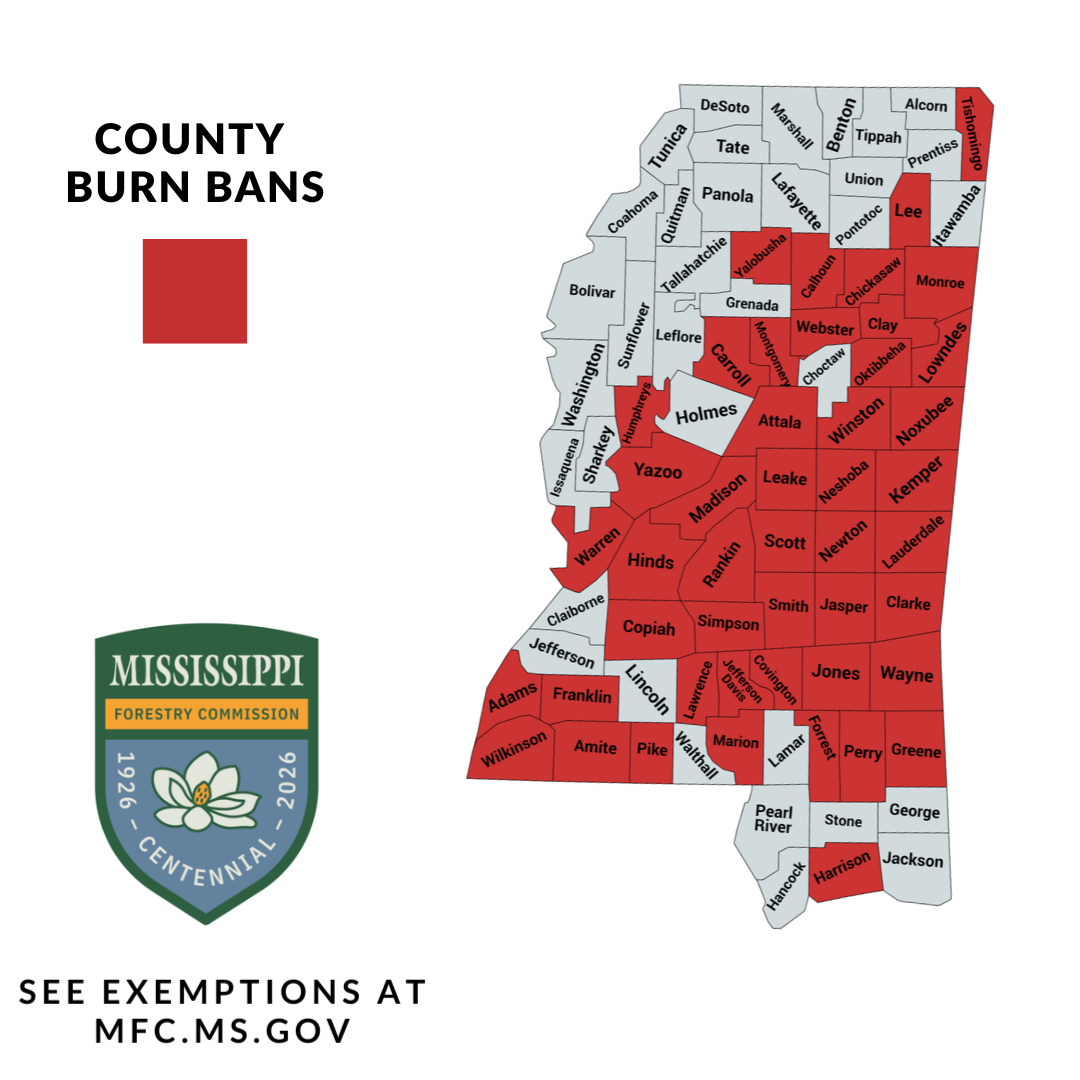
Tishomingo County officials have renewed the outdoor burn ban just as Northeast Mississippi experiences its first significant freeze of the season. According to the Mississippi Forestry Commission, the new ban took effect Friday, November 20, 2026, and remains in place through midnight on December 20. The previous ban, which began October 19, had been set to expire at midnight on November 19. The quick renewal closes any gap and keeps restrictions in force through Thanksgiving and well into the holiday season.
The timing is significant. Forecasters have called for a cold front to bring freezing temperatures to the region around Thanksgiving, with some forecasts pointing to overnight lows near 28 degrees in the Corinth and Iuka areas. A hard freeze kills remaining vegetation and quickly dries out leaves, grass, and brush. When combined with already dry ground, this creates highly flammable conditions. Even a small ember can travel far and ignite new fires.
Drought conditions have worsened across the area. The U.S. Drought Monitor map dated November 17 showed the entire Tishomingo County in moderate drought, with about 13 percent now rated severe—an increase from the prior week. Nearby Prentiss and Alcorn counties also show elevated severe drought coverage. Little meaningful rain is expected in the near term, and any light showers will not significantly wet dry fuels.
These conditions follow a recent wildfire response in the county. Earlier in November, firefighters contained a 176-acre wildfire in the Dawson Bottom area. Crews from Service Area 13, covering Alcorn, Prentiss, and Tishomingo counties, used bulldozers to combat head fires and protected timber and property belonging to roughly 25 landowners. Officials noted that even typically swampy bottomlands were bone dry, allowing fires to jump clearings and waterways easily.
Under the renewed ban, outdoor burning of any kind that produces an open flame and embers is prohibited. This includes campfires, bonfires, fire pits, fire rings, burn barrels, leaf and debris burning, and field burning. Wind can carry floating embers up to half a mile and start spot fires. The local sheriff’s department enforces the ban. Knowingly and willfully violating it is a misdemeanor punishable by a fine of $100 to $500 under Mississippi law.
Certain exemptions remain. The current order lists exemptions 1, 2, and 4: the Mississippi Forestry Commission itself, certified burn managers who have completed state training, and commercial contractors using heavy construction equipment when the burn meets Mississippi Department of Environmental Quality regulations. These allow carefully planned prescribed burns that reduce excess brush, improve habitat, and lower long-term wildfire risk. Homeowners and most residents do not qualify. About 80 percent of Mississippi wildfires start from debris burning on private property, which is why the commission urges residents to avoid all outdoor burning while the ban is active.
Propane or gas grills, propane or gas heaters, and charcoal grills remain allowed when used according to manufacturer instructions, kept well away from dry vegetation, and never left unattended. Charcoal requires extra care: let coals cool completely, soak them with water, and dispose of the ash only when it is cold to the touch in a metal container.
Residents in Iuka, Burnsville, Belmont, Tishomingo, Golden, and across the county should plan accordingly for Thanksgiving gatherings. Backyard fire pits and bonfires are off limits. Anyone needing to report illegal burning can contact the Tishomingo County Sheriff’s Department at (662) 423-7000, or call 911 in an emergency. The ban can be extended or lifted earlier depending on weather and fuel conditions, so checking the Mississippi Forestry Commission’s official list at mfc.ms.gov remains the best way to stay current.
As the first freeze settles over North Mississippi and drought persists, the extended burn ban is a practical step to protect homes, timber, and emergency responders. Holding off on outdoor burning until conditions improve helps keep the community safer through the holidays.